
Heirloom Jewelry Redesign: How to Give a Family Piece New Life
- J M Scully
- Jul 17
- 10 min read
Heirloom jewelry redesign is the process of reworking an inherited ring, pendant, brooch, or pair of earrings into a piece you will actually wear, while protecting what makes it meaningful. The goal is not to erase the past. It is to make a family treasure wearable again for the person who owns it now, using the lightest change possible.
The best approach starts with one question: what carries the meaning? Sometimes it is the whole piece. Sometimes it is a single stone, an engraving, or simply the memory of the person who wore it. Once you know that, you can choose the right path, from leaving the piece untouched to building something entirely new around its parts. A thoughtful redesign honors the original. A rushed one risks damaging fragile materials or making a change you cannot undo.
A good redesign separates emotion from execution. Many inherited pieces sit unworn in a drawer for years because the owner feels guilty changing them and is unsure how to keep them safe. That hesitation is reasonable.
Older jewelry often hides worn prongs, loose stones, and treated gems that react badly to heat or cleaning solutions. The right first step is rarely a sketch of a new design. It is an honest look at what you have, what it is worth, and its condition.
What Is Heirloom Jewelry Redesign?
Heirloom jewelry redesign covers four related but distinct services: restoration, resetting, repurposing, and full custom redesign. Restoration repairs and stabilizes a piece so it stays close to its original form.
Resetting moves a gemstone from a tired old mounting into a fresh setting. Repurposing turns one type of item into another, such as a brooch into a pendant. Full redesign uses the stones, metal, or design cues of the original to create a new custom piece.
These terms get used loosely, which leads people to assume redesign always means melting everything down and starting over. It does not. A skilled jeweler treats the original piece as a source of both material and meaning. The diamonds, colored stones, engraving, and even the metal can carry forward into the new design, depending on their condition.
Understanding the difference between these paths matters because each one preserves a different amount of the original. Restoration keeps almost everything. A full redesign may keep only the central stone. Knowing which outcome you want before any work begins prevents regret later.
Start With the Story, Not the Sketch
Before choosing a design, identify where the meaning actually lives. This single decision shapes every choice that follows, and it is often a family decision rather than a personal one.
Ask yourself a few direct questions. Is the emotional center the whole piece, the stone, the metal, or the engraving inside the band? Would changing the piece feel like honoring the person who wore it or erasing them? Are other relatives attached to the original form? Is your goal daily wear, occasional wear, an engagement ring, or simply a keepsake to hold? Should part of the original stay visible in whatever you create?
These questions sound simple, but they prevent the most common heartbreak in this work: a piece transformed beautifully, then mourned because a sibling wanted it kept as it was. When several people share a memory, the conversation belongs at the front of the process, not after the stones are out of their settings.
The answers also guide the technical plan. A band you want to wear every day demands different durability than a pendant worn twice a year. An engraving you want preserved changes how a jeweler approaches the metal. Meaning first, then mechanics.
Have the Piece Inspected Before Anything Else
Inspection comes before inspiration. Before you clean it, wear it, resize it, or redesign it, have an older piece examined by a professional. Antique and inherited jewelry frequently carries hidden problems that decide what is even possible.
Common issues include loose stones, worn or thinning prongs, a thin ring shank near breaking, cracked solder joints, fragile filigree, and previous repairs that were done poorly. Some settings cannot be safely resized or rebuilt at all. A piece can look perfect and still be one knock away from losing its center stone.
The Gemological Institute of America cautions that ultrasonic cleaning can shake loose stones in worn settings and damage certain gems, so the cleaning you might do at home could make a fragile heirloom worse. Regular professional inspection catches worn prongs, loose stones, bent settings, and hidden buildup before they become losses. This is the stage where you learn whether your piece needs fine jewelry repair before any redesign can begin.
Inspection also identifies the gemstones themselves. Knowing whether your center stone is a diamond, a sapphire, or a softer treated gem changes everything about the redesign that follows.
Preserve, Restore, Reset, or Redesign? A Decision Guide
Not every heirloom should be redesigned. The honest answer is sometimes to leave a piece exactly as it is. Use the framework below to match your situation to the right path.
Path | Best when | What changes |
Preserve | The piece has historical, artistic, or family importance as-is | Nothing, except documentation and safe storage |
Restore | The original design matters, but the piece is worn or damaged | Repair, clean, rebuild prongs, polish, stabilize |
Reset | The stone matters more than the old setting | The gemstone moves into a new ring, pendant, or bracelet |
Redesign | The piece is unworn, damaged, or no longer fits your style | Stones, metal, or design cues become a new custom piece |
Divide | Several relatives should share the memory | Stones or elements become several smaller pieces |
The preserved path deserves more respect than most redesign articles give it. A signed piece, a fine example of its era, or a ring a grandmother wore for fifty years may be worth more, in both money and meaning, left untouched. Documentation and proper storage are a legitimate outcome, not a failure to act.
The divide path solves a problem families rarely plan for. One large inherited ring can become several smaller keepsakes, letting siblings each carry a piece of the same memory. A jeweler experienced in custom jewelry design can plan this so each finished piece feels complete rather than fractured.
Why the Stone Determines the Redesign
The gemstone, more than the metal or the design, dictates what a redesign can safely become. This is the point most competitor guides skip, and it is where real expertise shows.
Gemstone durability comes down to two properties: hardness and toughness. Hardness, measured on the Mohs scale from 1 to 10, is resistance to scratching. Toughness is resistance to chipping and breaking.
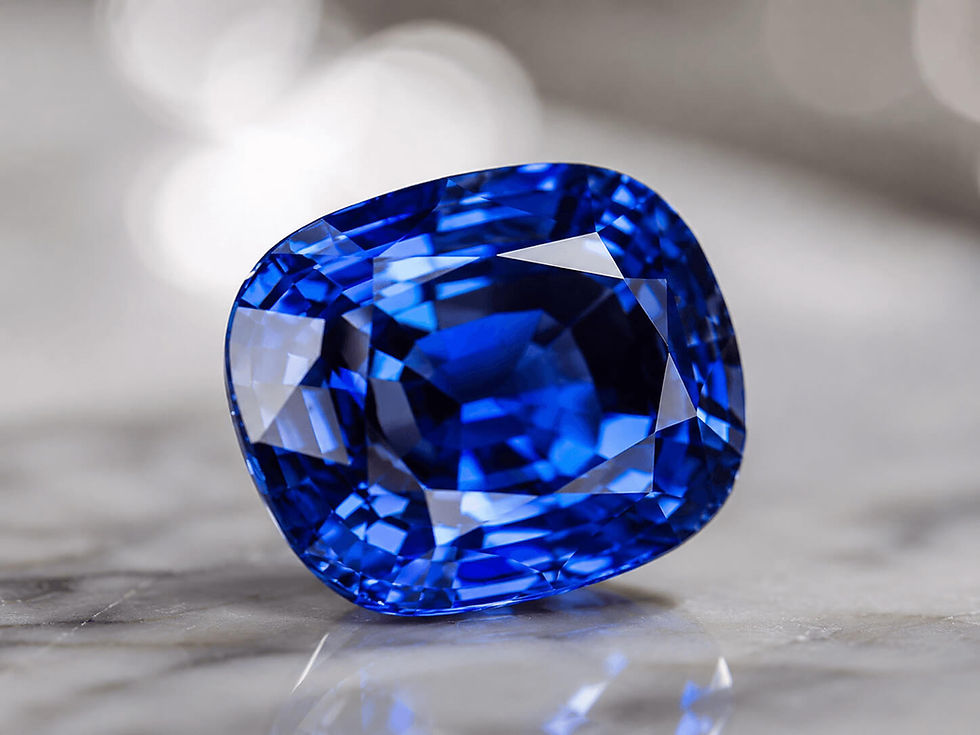
A stone can rate high on one and low on the other. Diamonds rank 10 on the Mohs scale, and rubies and sapphires both rank 9, which makes all three strong choices for rings worn every day. Every day, dust contains quartz at a hardness of 7, so any stone softer than 7 will gradually scratch from ordinary wear.
That hardness gap is why softer or more delicate gems often belong in pendants, earrings, or occasional-wear pieces rather than daily rings. Extra caution applies to emeralds, opals, pearls, turquoise, amber, coral, tanzanite, lapis lazuli, malachite, moonstone, and older foil-backed or glued stones. Emerald is the classic trap: it rates 7.5 to 8 for hardness, which sounds durable, but its internal fractures make it far more prone to chipping than that number suggests.
Treatment adds another layer of risk. Many emeralds are filled with oil or resin to improve clarity, and GIA warns that heat, solvents, steam, and ultrasonic cleaners can strip those treatments and expose the fractures underneath.
Opals can craze, developing a web of permanent surface cracks, when exposed to sudden temperature change. Pearls are soft enough that ultrasonic cleaning can partly dissolve them. A jeweler who knows your stone's treatment history will plan the setting, the work, and the future care around it.
Reusing Old Gold Is More Complicated Than It Looks
Customers often assume old gold can simply be melted and poured into a new ring. Sometimes it can. Often it cannot, at least not cleanly, and this is worth understanding before you ask for it.
Old jewelry can contain solder, mixed alloys, unknown karat gold, white gold alloys, plated material, and metal fatigue from decades of wear. When gold is remelted, the casting can develop porosity, tiny internal air pockets that weaken the finished piece and make it more likely to crack or lose stones.
Industry practice often calls for blending in a substantial share of fresh metal to avoid those defects, because the original alloys were never chosen to be cast again. Clasps, solder, and non-gold components also change the weight and must be removed or accounted for.
Because consumer sources rarely explain this honestly, treat it as a professional judgment rather than a fixed rule. In many redesigns, the original stones are reused more easily than the original metal.
Depending on the alloy, age, solder, and condition, a jeweler may recommend symbolically preserving the old metal, refining it, supplementing it with new gold, or using it only where it is structurally sound. Any of those choices can honor the original while producing a piece that lasts.
Let the Original Era Guide the New Design
Knowing which era your piece comes from helps you decide whether to preserve, restore, or redesign it with respect for its origins. You do not need to become a historian. You only need enough context to recognize what you are holding.
Victorian jewelry leans romantic, favoring yellow gold, ornate motifs, and old mine cut diamonds with their soft, squarish outline and open culet. Edwardian pieces moved to platinum, with lace-like filigree and delicate openwork made possible because platinum holds fine detail better than gold or silver.
Art Deco design, from the 1920s into the 1930s, is geometric and symmetrical, with milgrain edging, step-cut stones, and high-contrast pairings like diamond with onyx or sapphire. Retro jewelry of the late 1930s through the 1950s grew bold and sculptural, using yellow and rose gold in larger forms after wartime made platinum scarce.
A genuine period piece in good condition is often a candidate for preservation or careful restoration rather than redesign. A damaged or unwearable one can still inspire a new design that echoes its era. History tells you how much respect the original form deserves before you change it. If you suspect your piece is a true antique or estate item, that suspicion alone is reason to get it assessed before altering anything.
When to Get an Appraisal First
Get an appraisal before any irreversible change if you do not already know a piece's historical or monetary value. Removing stones or melting metal is permanent, and an appraisal protects you from destroying value you did not know was there.
There are several kinds of values, and they are not interchangeable. Insurance replacement value, also called retail replacement value, is what it would cost to replace the piece at today's retail prices, and it is the most common appraisal purpose. Fair market value is what a willing buyer would pay a willing seller, often used for tax and donation purposes. Estate value applies to inheritance and distribution. Sentimental value never appears on an appraisal, yet it is usually the real reason people redesign at all.
Industry bodies, including the American Gem Society and Jewelers of America, stress using a qualified, credentialed appraiser, and removing stones for independent identification by a laboratory like GIA can confirm exactly what you own before resetting.
Practical protection costs little: photograph the heirloom from several angles, keep any boxes and paperwork, write down the family history, and ask your jeweler whether an appraisal is wise before stones come out or metal goes into the crucible.
Heirloom Redesign Ideas That Keep the Meaning
The strongest redesigns reuse the emotional core of the original in a form that fits the wearer's life today. These examples show how flexible the process can be.
A grandmother's diamond can be reset into a modern engagement ring. A brooch no one wears can become a pendant worn often. Two inherited bands can be combined into a single anniversary ring. Old diamond earrings can become side stones flanking a new center. The metal of a worn wedding band can be incorporated into the inside of a new ring, hidden against the skin. Several family birthstones can come together in a mother's ring.
Practical fixes carry meaning, too. A fragile ring can be converted into a pendant so it faces far less impact than it would on a hand. One large piece can be divided into several keepsakes for siblings.
An engraving can be preserved inside a new shank or on the back of a pendant, so the words survive even when the original form does not. These are the kinds of projects that begin with a custom piece consultation, where the design grows out of the specific stones and history you bring in.
How to Care for Your Redesigned Piece
A redesigned heirloom needs the same protection that would have prevented the original's damage. Care extends the life of the new piece and the stones it carries forward.
Clean most jewelry with warm water and a few drops of mild dish soap, using a soft brush, then dry it fully. Skip the ultrasonic cleaner for emeralds, opals, pearls, and any treated or fragile stone, since vibration and heat can crack, dissolve, or strip them. Never use alcohol or harsh chemicals on pearls.
Store pieces separately so harder stones do not scratch softer ones, and keep them away from lotions, perfumes, and chlorine. Bring rings and pendants in for periodic professional inspection so worn prongs and loose stones get caught early, exactly the failures that send heirlooms to the repair bench in the first place. For long-term storage, a proper jewelry storage routine keeps fragile inherited pieces safe between wears.
Bring Your Heirloom Back to Life
An heirloom redesign should protect what matters most while making the piece wearable for the person who owns it now. Whether the right path is preserving, restoring, resetting, or reimagining your piece, the work starts with an honest look at the stones, the metal, and the memory behind them.
If you have an inherited ring, pendant, or set of stones waiting in a drawer, here is where to go next at J.M. Scully Jewelers in Holden, serving the greater Worcester area.
Start the conversation
Book a custom piece consultation to plan a reset, repurpose, or full redesign around your stones and family history.
Explore our approach to custom jewelry design to see how inherited pieces become
something you will wear.
Repair and assess first
Need a worn setting stabilized before any redesign? Begin with fine jewelry repair.
Not sure what you have? Read the difference between antique, vintage, and estate jewelry before altering anything.
Sourcing a new stone for the redesign
If your project needs a fresh center or accent stone, browse our diamond selection and finished pieces, such as the three-stone amethyst and diamond ring or diamond anniversary band, for design inspiration.
Care for the finished piece
Keep your redesigned heirloom safe between wears with our guide to proper jewelry storage.
Ready to begin? Schedule your heirloom consultation, and we will walk you through the right path for your piece.

Comments